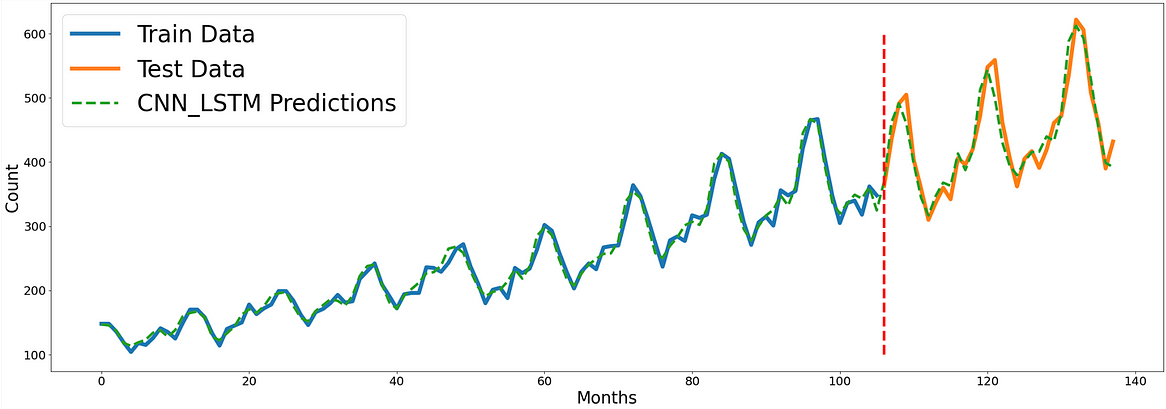
Summary
This course provides a comprehensive introduction to the principles and methods of time series analysis. It covers a wide range of topics, including statistical analysis, modeling, forecasting, and applications of time series data. The course is designed to be applicable to various fields and data including economics, finance, sales, sensors, and many others. The course covers the main concepts aiming to provide preparedness for students to find proper methods for their domain specific scientific projects and learn to use them in the form of self learning.
Course Objectives
- Understand the fundamental concepts and techniques of time series analysis.
- Learn how to apply time series analysis methods to real-world data.
- Develop skills in modeling, forecasting, and interpreting time series data.
- Gain practical experience in using software tools for time series analysis.
Prerequisites
- Basic knowledge of statistics and probability
- Understanding of data analysis and visualization techniques
- Familiarity with Python programming language
Content
- 8 theoretical lectures (16 academic hours)
- 8 workshop lectures (16 academic hours) (Python)
Assessment Methods
Workshops 80% and theoretical exam (20%)
Theoretical Lessons
-
Introduction to Time Series
Analysis
- Specificity of time series analysis
- Types of time series data
- Time series models and their characteristics
- Applications of time series analysis
- Statistical Analysis of Time Series 1
- Basic statistical properties of time series
- Autocorrelation and partial autocorrelation functions
- Stationarity and its importance in time series analysis
- Specificity of time series analysis as a statistical task
- Statistical Analysis of Time
Series 2
- Residual analysis
- Moving average filtering for time series analysis
- Linear regression analysis of time series
- Robust statistics and their applications
- Adaptive regression models
-
Autoregressive Moving Average
(ARMA) models
- Autoregressive (AR) and Moving Average (MA) models
- Integrated ARMA (ARIMA) models and their applications
- Seasonal ARIMA (SARIMA) models
- Model selection and diagnostic checking
- Examples of solving time series problems using ARMA models
- Feature Engineering in Time
Series Analysis
- Time series features and their importance
- Methods for extracting features from time series data
- Feature representation and processing techniques
- Exploratory data analysis for time series
- Machine Learning in Time
Series Analysis 1
- Specificity of time series analysis using machine learning methods
- Review of time series analysis problems and solutions
- Time series metrics and their applications
- Time series clustering and its uses
- Distance metrics in machine learning for time series
-
Machine Learning in Time
Series Analysis 2
- Anomaly detection in time series
- Classification problems and methods for their solution
- Regression problems and solutions using machine learning
-
Deep Learning in Time Series
Analysis
- Advantages of deep learning over classical machine learning in time series analysis
- Neural network architectures for time series analysis
- Recurrent neural networks and their applications
- Convolutional neural networks for time series
- Attention mechanisms and their use in time series analysis
Practical Lessons (Workshops)
- Time Series Analysis with Pandas
- Time Series Generation (Simulation)
- Introduction in StatsModels
- Python SKTIME library (SCIKIT-TIME)
- SARIMAX Forecasting
- Time Series Classification
- Multivariate Time Series
- Deep Learning Methods
- Преподаватель: Матармаа Ярно Олави
- Преподаватель: Коломыцева Анна Олеговна
- Преподаватель: Павлов Марк Владимирович
- Преподаватель: Долганов Антон Юрьевич
- Преподаватель: Мальцева Наталья Анатольевна
- Преподаватель: Юманова Ирина Фарисовна
- Преподаватель: Долганов Антон Юрьевич
- Преподаватель: Коршунова Елена Владимировна
- Преподаватель: Долганов Антон Юрьевич
- Преподаватель: Долганов Антон Юрьевич
- Преподаватель: Матармаа Ярно Олави
- Преподаватель: Долганов Антон Юрьевич
- Преподаватель: Борисов Василий Ильич
- Преподаватель: Борисов Василий Ильич
- Преподаватель: Лиханов Андрей Сергеевич
- Преподаватель: Наумова Ольга Михайловна
- Преподаватель: Солодушкин Святослав Игоревич